



Table of Contents
- Why Neighborhood Planning Works
- Choose Your Food Style Before Choosing Restaurants
- Build a Three-Day Route
- Match Meals With Activities
- Plan for Budget and Timing
- Use Seasonal Food Events
- Avoid Common Planning Mistakes
- Sample Weekend Framework
- Final Checklist Before the Trip
New York City rewards food travelers who plan by neighborhood rather than chasing a famous meal in every borough. A focused route makes room for unplanned bakeries, sidewalk snacks, coffee breaks, and the kind of local discoveries that rarely fit into a packed spreadsheet. For restaurant ideas that can help you begin narrowing down an area, Franki can be a useful starting point.
The goal is not to eat at the most places. It is to build a weekend that feels enjoyable between meals, with enough time to walk, browse, rest, and change plans when something appealing appears. One thoughtful reservation, a few flexible food stops, and a realistic map can create a better trip than an exhausting list of viral recommendations.
 |
| Photo credit: Sergey Guk on Pexels. |
Why Neighborhood Planning Works
New York is large enough that a poorly planned itinerary can turn a weekend into a series of subway rides. When you choose one connected area for each day, you spend less time traveling and more time enjoying the city. A day in the Lower East Side, Chinatown, and the East Village can flow naturally. A day split between a brunch in Brooklyn, a late lunch in Midtown, and dinner in Queens often feels rushed.
Geography also makes spontaneous choices easier. If your planned lunch has a wait, you can look nearby rather than panic-searching across the city. A memorable food trip is not defined by how far you traveled for one plate. It is defined by the meals, atmosphere, and moments that fit together.
Choose Your Food Style Before Choosing Restaurants
Before making reservations, decide what kind of weekend you actually want. Select two or three priorities, then use them to filter your choices. Trying to cover every cuisine, dining format, and neighborhood usually leaves little room to enjoy any of them.
- Budget-friendly weekend: Plan one sit-down meal, then build around slices, dumplings, sandwiches, bakeries, food halls, and dessert.
- Date weekend: Pair a scenic walk or gallery visit with one relaxed, well-timed dinner reservation.
- Family trip: Choose flexible menus, early seating times, and attractions within a short walk.
- Food-focused visit: Give each day a theme, such as classic New York dishes, a specific regional cuisine, or market grazing.
Build a Three-Day Route
Day one should be easy. Stay near your hotel, take a short neighborhood walk, and choose a low-pressure dinner that a delayed arrival will not ruin. Day two is the main food day, with your priority reservation plus a nearby market, museum, park, or cultural stop. Day three should remain lighter, leaving space for brunch, a final snack, and travel home.
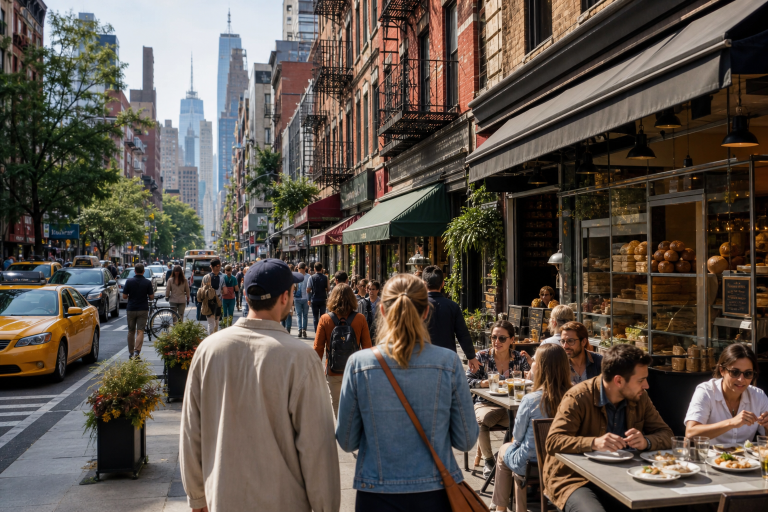
Avoid scheduling several far-apart meals on the same day. Even if the map makes everything look close, station transfers, weather, lines, and tired feet can reshape the plan. Leave at least one open block every day for a detour, an unexpected queue, or simply a break.
Match Meals With Activities
The best dining plan works with the rest of the day rather than competing with it. Pair a museum visit with a calm lunch where you can sit for a while. Follow a long walking route with counter service or casual food. Book an early dinner before a theater, music, or another timed event. Treat market visits as opportunities for small plates and snacks instead of adding a full meal immediately afterward.
For waterfront outings, keep the meal flexible because wind, rain, crowds, and transit delays can affect timing. In every case, consider walking distance, reservation time, the group's energy level, and whether the meal is likely to be quick or leisurely.
 |
| Photo credit: Zeynep Merve on Pexels. |
Plan for Budget and Timing
Divide your food budget into three buckets: planned meals, spontaneous stops, and drinks or dessert. The final total should also account for sales tax, gratuity, possible service charges, and transportation. Lunch can be a particularly smart way to try a more formal restaurant without committing to the cost and duration of a full dinner.
- Set a daily food budget that includes more than restaurant bills.
- Reserve one priority meal, then keep the rest of the schedule adaptable.
- Hold back money for snacks, coffee, and a last-minute standout find.
- Read menus before traveling across town, especially if you have dietary needs.
- Confirm hours and reservation policies on the day you plan to visit.
Use Seasonal Food Events
Seasonal dining programs can give a short trip a useful structure without taking over every meal. For example, the Summer 2026 NYC Restaurant Week program ran from July 20 through August 16 and included more than 600 restaurants across all five boroughs. Future editions can be a practical way to compare neighborhoods, cuisines, meal types, and prix-fixe price points, but always check the current rules before booking.
Food festivals can also serve as a weekend anchor. The 2026 NYCWFF weekend in the Seaport is scheduled for October 15 through October 18, making Lower Manhattan a logical base for festival events, waterfront walks, and nearby dining. Review ticket details, event times, bag policies, and expected crowds before building other reservations around a festival.
Avoid Common Planning Mistakes
- Trying to visit too many boroughs in one day.
- Booking meals without checking door-to-door travel time.
- Choosing every restaurant only because it appears in a ranking or social post.
- Confusing a quick counter-service stop with a long tasting-menu experience.
- Leaving no allowance for weather, transit disruptions, or lines.
- Planning a heavy meal before several hours of walking.
- Assuming menus and hours stay the same every day.
Sample Weekend Framework
On Friday evening, stay close to the hotel for dinner and take a short walk afterward. On Saturday morning, visit a bakery district, market, or cultural attraction. Keep lunch flexible, then enjoy your main reservation in the evening. On Sunday, choose coffee, brunch, or a light meal near a park or museum, and leave enough time for one final food stop before departure.
 |
| Photo credit: Stephanie Hurbe on Pexels. |
Final Checklist Before the Trip
- Confirm restaurant hours, menus, and cancellation policies.
- Make sure the menu works for everyone in the group.
- Review walking and transit times between meals and activities.
- Save one backup option in every planned neighborhood.
- Check event dates, ticket requirements, and weather.
- Wear comfortable shoes and leave one meal open for spontaneity.
A strong New York City food weekend does not require a packed schedule. Focus on connected neighborhoods, make one or two reservations that genuinely matter to you, set a realistic budget, and allow time to wander. The best meal of the trip may be the one you never planned.







0 replies:
Post a Comment