
Key Takeaways
- Children learn emotional skills through repeated practice, not one serious conversation.
- Predictable routines, rest, movement, and connection can make stressful moments easier to manage.
- Adults can teach coping by listening, modeling calm, and holding clear boundaries.
- Persistent distress that disrupts sleep, school, friendships, or safety deserves additional support.
A homework meltdown, tears before school, or a teenager who answers every question with "fine" can leave parents feeling unsure about what to do next. Big feelings are part of growing up, but children are not born knowing how to recognize emotions, explain what they need, or recover after disappointment.
Small habits can create the steady practice children need. Families who want more individualized guidance may benefit from speaking with a family and child psychologist. Pacific Psychology NYC is an Upper West Side Manhattan practice providing evidence-based therapy and psychological services for children, teens, and families, including support for anxiety, behavior concerns, parent-child relationships, family communication, and learning-related questions.
Start With the Idea That Emotional Skills Are Learned
When a child struggles, it is tempting to label the behavior as defiance, laziness, or overreaction. Often, the situation is more complicated. A child may be tired, worried about a friendship, overwhelmed by noise, frustrated by a learning task, hungry, or unsure how to ask for help. The same outward behavior can have many causes.
A helpful starting point is to treat emotional regulation as a skill. Children build it through safe relationships, repetition, and realistic expectations. They need adults who can notice the feeling underneath the behavior while still setting limits around unsafe or hurtful actions.
Build a Daily Emotional Check-In
A short check-in at breakfast, in the car, after school, or at bedtime can make feelings easier to discuss before they become overwhelming. Keep it calm and brief. The goal is connection, not an interrogation.
- Ask, "What part of today felt easy?"
- Try, "Was there a moment that felt too big?"
- Offer choices: "Do you want help, comfort, or space?"
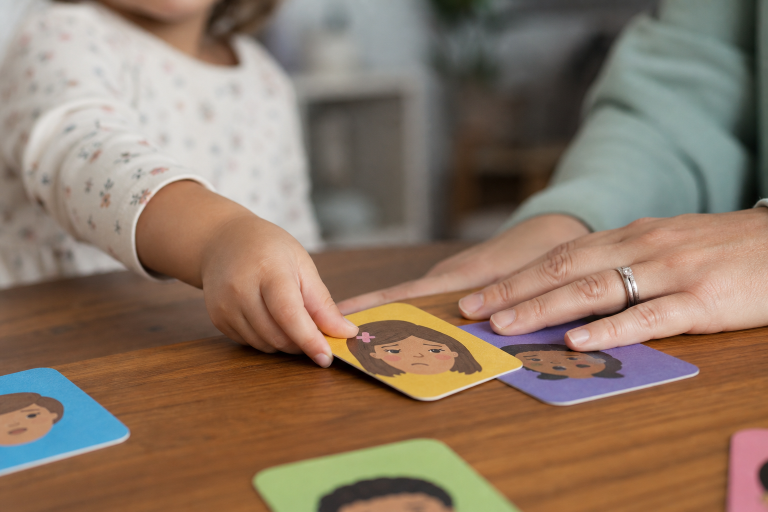
- Use colors, faces, or a one-to-five scale for children who struggle to find words.
Listen first. Reflect what you heard before suggesting a solution: "It sounds like lunch felt lonely today." Feeling understood often helps a child settle enough to think about what comes next.
Use Routines to Lower Daily Stress
Structure does not mean every minute must be planned. It means children can generally predict what happens next. Keep wake-up times, meals, homework, and bedtime within a consistent range when possible. Give transition warnings such as, "Ten more minutes, then we put on shoes," and break a large task into smaller steps.
Sleep, physical activity, nourishing meals, and supportive relationships also affect how well children cope with everyday stress. The CDC's guidance on children's mental health offers a useful overview of the role daily functioning, healthy relationships, sleep, and early support can play in well-being.
Teach a Small Set of Coping Tools
No strategy works for every child or every feeling. Instead of demanding that a child "calm down," teach a simple sequence they can practice during peaceful moments.
- Notice: Identify body clues, such as clenched hands, a fast heartbeat, tears, a hot face, or a tight stomach.
- Pause: Try slow breathing, stretching, drinking water, counting, quiet time, or a short walk.
- Choose: Ask for help, solve one piece of the problem, take a break, or try again later.
Younger children may respond to bubbles, a stuffed animal, a drawing, or a cozy corner. School-age children may like a coping card, music, or journaling. Teens may prefer a walk, paced breathing, a trusted text message, or identifying the next manageable step.
Model Calm Responses During Hard Moments
Children learn from what adults do under pressure. A steady voice, brief directions, and a clear boundary are often more effective than a long lecture. Try naming the emotion without approving harmful behavior: "You are angry, and I will not let you hit. We are going to take a minute, then try again."
Parents will lose patience sometimes. Repair matters. A simple apology, such as "I raised my voice, and I want to handle that differently next time," shows children that mistakes can be acknowledged and repaired. Supportive relationships and repeated opportunities to practice self-regulation help build resilience over time, as explained by the Center on the Developing Child at Harvard University.
Make Room for Play and Connection
Emotional support does not need to feel like a formal lesson. Ten minutes of child-led play, a shared walk, cooking together, or a card game can create a low-pressure opening for connection. Games also give children chances to practice waiting, taking turns, losing, and trying again.
Stories, art, music, pretend play, and movement can be especially useful when direct conversation feels too intense. Ask what a character might be feeling or what could help them. Children often reveal concerns more comfortably when they are not asked to speak only about themselves.
Support Emotional Skills at School
Home and school work best together when adults use simple, consistent language. Ask teachers which strategies help your child reset, and share relevant changes at home, such as poor sleep, a move, family stress, or a difficult transition. Look for patterns around tests, lunch, recess, group work, or dismissal. Academic frustration can also raise emotional pressure, so it is worth asking whether a learning or attention challenge may be part of the picture.
Know When Big Feelings Need More Support
Occasional anger, worry, sadness, and conflict are normal. Consider contacting a pediatrician, school professional, or licensed mental health provider when concerns persist for several weeks, worsen over time, interfere with school or friendships, disrupt sleep or eating, lead to frequent physical complaints, or involve aggression, withdrawal, panic, school refusal, or safety concerns. If a child talks about self-harm or seems in immediate danger, seek urgent crisis support or emergency assistance right away.
Common Questions Parents Ask
No. Some children talk while drawing, walking, playing, or doing a task beside an adult. Focus on making connections available rather than forcing a long discussion.
Offer two choices instead of a long list. Practice tools when the child is calm, and consider barriers such as fatigue, sensory overload, embarrassment, or fear of getting something wrong.
Flexible routines usually reduce uncertainty. Overly rigid rules can add pressure, so aim for predictability with room for real life.
A Simple Seven-Day Practice Plan
- Day 1: Start a one-minute emotional check-in.
- Day 2: Choose one steadier morning or bedtime step.
- Day 3: Practice one calming tool while everyone is calm.
- Day 4: Spend ten minutes in child-led play or a shared activity.
- Day 5: Notice one common trigger for frustration.
- Day 6: Ask a teacher what support works at school.
- Day 7: Review what helped and keep one habit going next week.
Children do not need perfect parents or perfect routines. They need steady connection, clear limits, chances to practice, and adults who notice when extra help is needed. Ordinary daily habits can become powerful tools for handling feelings at home, at school, and beyond.